I used to think that my father chose heroin over me. And because I thought my father chose heroin over me, I had a lot of penned up resentment and animosity towards him. I was angry at my dad. Even though I never blatantly disrespected him, there were times when I was disrespectful. For years I was mad, confused, angry, upset and disappointed with my father. Then he was diagnosed with Throat Cancer and ultimately died. It wasn’t until then that I realized that my perspective was skewed and I was off base with my perception. You see people differently when you can no longer see people.
My father never chose drugs over me. He was a heroin addict before I was conceived. But that wasn’t all that he was. My problem was simply that all I could see and all that I allowed to take precedent in my life as it pertains to my dad was his drug addiction.
My parents were together for 50 years. You would think that in my eyes that would overshadow my dad’s addiction, but it didn’t’. My father came home every day, unless my mother put him out. And even then, he would only go to my aunt’s house for a day or two. Again, you would think that in my eyes that would overshadow my dad’s addiction, but it didn’t. My father never abused me or my mother. When he worked he would bring his paycheck home and contribute financially to our wellbeing. He had a personality that would polarize a room causing anyone within earshot to hold onto his every word, eventually erupting in laughter, repeatedly. He was a slick dresser and an all round cool dude. He was my father and until his dying days I called him “Daddy.”
As a child I used to want to be like my father. I studied him and would imitate him in my bedroom mirror. How he walked, how he talked, how he danced, how he…When I would gather with cousins I’d emulate my dad and make them laugh by telling stories (lies). And just like the man that I looked up to, I’d get the same response when the room would erupt in laughter, repeatedly. Then one day I saw my father use drugs intravenously.
My bedroom was adjacent to the bathroom. I used to hear my father enter into the bathroom and turn the faucet water on. The water would run without ever being disrupted. It was a consistent flow. One day my curiosity got the best of me and I decided to peep through the bathroom door makeshift keyhole. It was then that I saw the most painful visual that still lurks in my head almost forty years later. It was the first time that I say my father shooting dope. I banged the door and went back into my bedroom and cried. I was just a child, but old enough to understand the activity that he was engaged in. Unfortunately, addicts, dope fiends and others who had fallen victim to societal ills were prevalent in the community from which I come. So drug usage wasn’t new to me. Just the fact that my father, my daddy, my hero, was a drug user, was.
That day my life forever changed. I began to see my father differently. I began to treat my father differently. I lost respect for my dad. Then I got mad and angry with my father. Internally and emotionally I was perplexed and confused. I used to ponder the question, “why would he choose that over me, over us, over his family”? I couldn’t comprehend it. And like most people do when people are dealing with their own turmoil and issues, I made his addiction about me. I never tried to understand what caused my father to become an intravenous drug user.
Even as an adult, I never tried to understand the demons and inner turmoil my daddy was trying to escape through drugs. I never even tried to get him help. The story goes that my father was mourning the death of his dad when a friend said, “I have something that could take that pain away.” From mourning his own dad, to negatively impacting his life as a dad. My father first shot dope as a teenager. Though my parents knew each other at the time, they had yet to start dating one another. It would be more than 5 years after this that I’d be conceived.
His drug usage and reasoning to use drugs didn’t have anything to do with me. But I couldn’t understand that. Not at 10, 20, 30 or even 40 years of age. I just couldn’t fathom. In hindsight, maybe I was asking the wrong question. Instead of “why did my father choose drugs over me,” maybe I internalized, “why am I not enough for my daddy to stop using drugs”?
For many years I was hurt. I can recall special monumental stages in my life that my father substance abuse impacted me. One of my earliest memories as a child is of me, my cousin and best friend in my living room watching television with my dad. My dad began to nod. While he was nodding, my cousin and friend began to laugh. I remember my blood boiling. I don’t know who I was angrier with my cousin, my friend or my father. Nevertheless, I remember screaming aloud, “at least my father loves me.” That’s what I said and that’s what I believe.
Regardless, my father loves me. I never doubted that my father loved me. I just thought that if he loved me more than he would abuse himself less. Then there was the time that he took me to football tryouts. He nodded while we were waiting in the bleachers. Needless to say, I ain’t never played organized football. Once we left those tryouts, I ain’t have no intentions of ever returning. Damn daddy. At practically every special monumental stage in my life that my father participated in, he was consumed by drugs. And I loathed it.
At least my father loves me. I uttered those words aloud to my cousin and friend when I was about 10. As they laughed at my father slumber induced by heroin. Later in life I asked myself, “why did you say that in defense of your dad? Did you mean it?” To which I replied, “I said it out of hurt and pain. I said it because I was embarrassed and couldn’t muster anything else up to say. I also said it because I believed it just as much then, as I do now.” What does love look like?
My pastor says “l-o-v-e” is actually spelled “t-i-m-e.” And I concur. You see, during my childhood, my father was an addict, but he’d be deemed a functioning addict. He wasn’t high every day. He’d work as a skilled welder Monday through Thursday without any drug usage or even any alcohol consumption. However, on Friday after work, he’d come home unlike his normal self. Then the following Saturday I’d bear witness to some abnormalities. But by Sunday he’d be getting himself ready to start the work week.
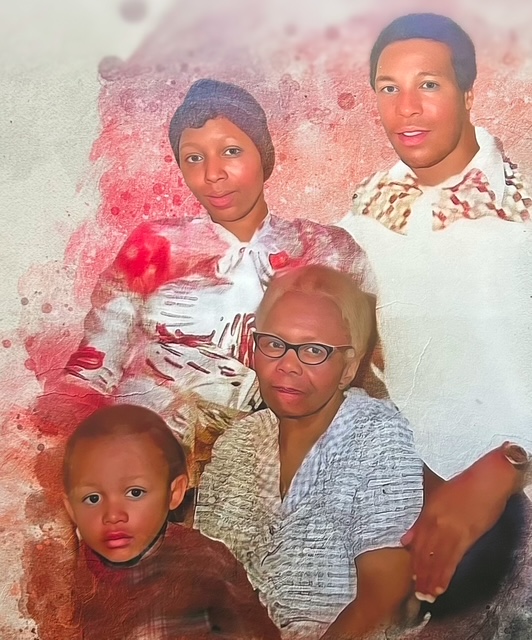
So there were many days that he, my mother and myself would just laugh and have fun with each other. As a matter of fact, my childhood memories are so fond of my daddy that the picture I chose to use of him on the cover of his obituary is one from that time period. The statement that I was attempting to make by choosing an old picture in particular is, “that’s my father. That’s the man I know. That’s the man that Iadore.”
When my father would be in a stupor, people would ask my mom, “why don’t you leave him?” My mother would point at my dad and say, “that’s not the man that I fell in love with.” His addiction is not who he is. I couldn’t understand those words as a child. Shid, if I can be completely honest, I couldn’t understand those words for most of my adulthood. But eventually I would understand my mother’s words regarding my father.
He’s not his addiction. He never was. He was much more than a person addicted to drugs. He is my father. He is my daughter’s grandfather. And he was my mother’s significant other until he died. My father was like most of my childhood friends father’s. But the biggest difference that had the greatest impact on me personally was the fact that he never left home. My father’s presence in my home had the most significant impact in my life.
I’ve been with my wife for 26 years and we’re approaching our 23rd year of marriage. I’m not even sure if she understands how much of my dad’s presence in my childhood impacts me in my commitment to her and our children My father never left. Even when my mother and I were intentionally blowing his high. He was there. Him being there made me respond to my mother differently. Him being there helped me navigate my neighborhood differently. I avoided potential pitfalls that many of my peers succumbed to, thanks to my dad.
I remember as a young adult, my cousin Omar pointed out to me that my father’s example of “what not to do” regarding his substance abuse issues was all the example that I needed. At the time, I didn’t see that statement as truth, so I begged to differ. Angrily I argued with my cousin. I remember saying that our examples are non-existent and stating the difficulties of learning what not to do by someone that’s doing it. Oftentimes we tend to do what we see.
It was around this same time that my father pulled me aside and uttered words that resonate more with me now than they did at that time. My father said, “Man, I know that we don’t have the father/son relationship that you want, but I did the best that I could.” He said, “I did the best that I could.” How could he say that he’d done the best that he could, I pondered. How could you say that to me Daddy? What I didn’t know then, that I better understand now is that when a man tell you that he is doing the best that he can, believe him. Who am I to question otherwise?
In 2013 my father was diagnosed with cancer. He had throat cancer. He ultimately died from throat cancer. As a matter of fact, both my parents contracted the deadly disease. My mother’s diagnosis is lung cancer. By the grace of GOD, she’s still fighting. But there was a time, before my dad died one day after his 69th birthday in 2017, that I would leave one hospital from visiting a parent just to travel to another hospital to visit the other. That was a very difficult time in my life. I found myself strained mentally, physically, emotionally and spiritually. I found myself impacted in unimaginable ways. As my parents only child, for years during their simultaneous illness, I was consume with thinking about them dying. Everyday from dusk to dawn I thought about having to plan their funerals. Every time my phone would ring, I got scared. I was following behind ambulances regularly. Sometimes I would beat the ambulance to the hospital. That had become a norm. But through the whole ordeal of my dad being sick, there was one thing that I’d become extremely grateful for. The conversations that he and I would have when I visited him in the hospital were priceless. Those conversations allowed me to put things in perspective. I realized that I had forgotten the hierarchy of our relationship. Regardless of what my father had become addicted to, he was still my father.
During those times that we’d talk and laugh, I can recall feeling regret. For years I thought that he owed me an apology. On his sickbed he began to open up and divulge some things to me. It felt like he was attempting to apologize. You know what? I wouldn’t allow him to because in hindsight, I felt that I was the one whoowed him an apology.
I think that’s what death does. It’ll cause you to put things in perspective, to see things differently. It’ll cause you to think about the time you wasted by blaming and shaming people, including yourself. It’ll make you wish that you had more time to spend with one another. It will remind you that despite any deficiencies or shortcomings of an individual, the good far outweigh the bad. And in this rat race of life that we all find ourselves entangled in, none of us are without flaws and we’ve all fallen short in one way or another. So when my father told me that he was doing the best that he could, my only response to him should’ve been “thank you daddy.”
| This was written as a cautionary tale to the living. If you have a parent that’s still living, who has tried to parent you in spite of their shortcomings, try to forgive them. And ask them to forgive you. Then immediately began to work towards cherishing and enjoying the remaining moments that you have with them. Don’t hold onto that grudge or those ill feelings that’s preventing you from loving them and from properly being loved by them. |


Thank you for reading TheDewsPerspective